

Protons to planes: Maria Tye turns a love of chemistry into a career in Aerospace
Maria was in high school when she first heard the words “chemical engineering.” She remembers that she did really well in chemistry class that year… so well, that her teacher suggested she think about studying chemical engineering in college. “It sounded fun and challenging and like something that would be economically sound,” Maria remembers. She was good at math and knew she wanted to build a stable future. “We went through some tough times when I was a kid and I wanted things to be different.”
Maria’s now working as a project engineer at Amphenol Aerospace, a company that develops electrical connectors for aerospace vehicles. Her work focuses mainly on the commercial side. She’s been part of projects tied to the growing industry of electric aircraft.
“Every day is different,” she says. “As a chemical engineer, we end up in a variety of positions. The skills are transferable because of the depth of the studies. You depend on your team members. You learn a lot about networking. It transfers quite a bit into the workplace.”
Staying grounded with the support of family and the outdoors
Maria’s path to engineering started far from aerospace. Maria is the second youngest in a family of seven kids. When she was little, her family lived in Texas. She was only 5 years old when her family lost most of their belongings in a fire. That’s when they decided to relocate to Vermont. It took a few years for the family to get back on their feet; Maria was in eighth grade when her parents proudly bought their first house in South Burlington.
“Mom started working again when my youngest sibling started school. We had state support and lots of help,” she says.
“My parents still have this massive table that they got as a donation from someone to help them get on their feet. Everyone still gathers around it, but we don’t fit sitting down anymore,” she laughs. Along with her siblings and their partners, there are 11 nieces and nephews. “There’s always a ton of people around.”
Maria was quiet and studious as a child; she received extensive support from her teachers. In middle school, she struggled with homework until a teacher challenged her. “She told me I could get into a higher math class early if I could get my homework done. That motivated me.”
Books and libraries were a constant. “I’ve always been a big bookworm. I read all the time and I loved the library.”
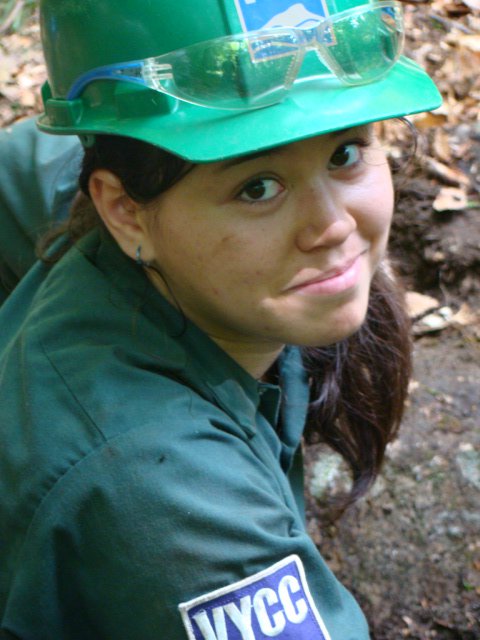
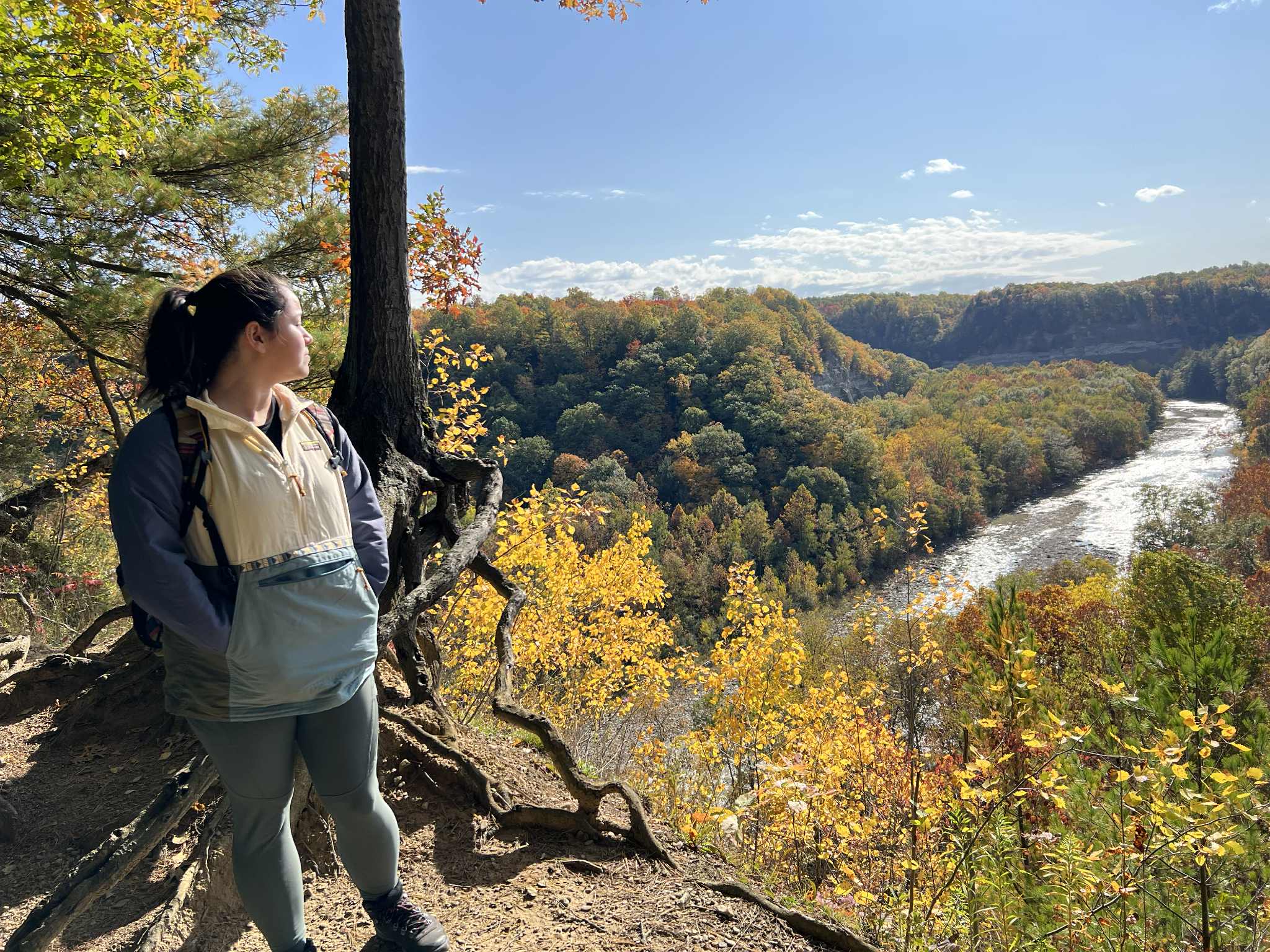
She also found joy outdoors, with summers spent working for the Vermont Youth Conservation Corps. “I worked and did four weeks living out in the woods, then did seven weeks the next summer because I liked it so much. I like hiking a lot. I wish I did more of it as an adult,” she laughs.
Finding her way with the help of VSAC
College was not a given for Maria. Neither of her parents had gone—her mom didn’t finish high school—and while her parents encouraged her, they were anxious about costs. “They had no clue. They didn’t know a credit score was involved,” she says.
That’s where VSAC came in. Through VSAC’s Talent Search and GEAR UP career and college readiness programs, she connected with Outreach Counselors Matt “Beagle” Bourgault and Nancy Schwartz. “They helped with college tours and with understanding the requirements of the paperwork. I still have a professional email because Beagle let me know ‘Tinkerbell’ wasn’t the best email to have on my college applications,” she laughs.
She learned to make her own appointments, gather information, and advocate for herself.
VSAC helped me with the grant programs and timelines, and the “how” of looking at colleges. They’d meet me in the library and go over things, checking on everything, and asking me about my aspirations. They were there to help students like me who needed the extra help. And, they helped me look at what degrees could get me where I wanted to be.
When it came time to choose, Clarkson University rose to the top. “It was the only college I could find that had chemical engineering. It was a good engineering school. I had a gut feeling in my research, so I applied and was so excited when I was accepted.”
Financing Clarkson, however, was a constant challenge. “My parents’ credit score wasn’t good enough to help me get the loans I needed. We didn’t realize that would be an issue. I almost didn’t finish college because of it.”
Her grandparents helped her first semester, then a friend’s parent stepped in and cosigned a loan for her. “I ran track and field with this friend, and their parent stepped in to help me. It was really a miracle and it got me through until my uncle could help. It was a real motivator for me too, I was determined to do good enough that I didn't fail them.”
A few years after graduating, she paid off that loan. “Getting that loan was so hard...I almost couldn’t see a way to finish college that one year until I got that help. It’s amazing to think I’ve actually paid the loan off.”
Learning to lean on her peers
College pushed Maria academically and socially. “It forced me to be social. I was more of an independent, older-than-my-years kind of person in high school. Clarkson broadened my horizons.”
She leaned on peers to get through the difficult program. “You can’t survive that degree at Clarkson without leaning on your peers. You learn networking and teamwork.”
But she also struggled. “I had some struggles with mental health that I really had to work through. It was close—I was close to thinking I might not graduate.”
She joined Alpha Phi Omega, a co-ed fraternity focused on community service, and also worked a few on campus jobs. Over the summer, she took a job in manufacturing. “I did a lot of sheet metal work—finishing and minor operations–on industrial kitchen appliances. I wanted to DO the hard stuff. A lot of people don’t have an eye into manufacturing, and I think it’s really helped me.”
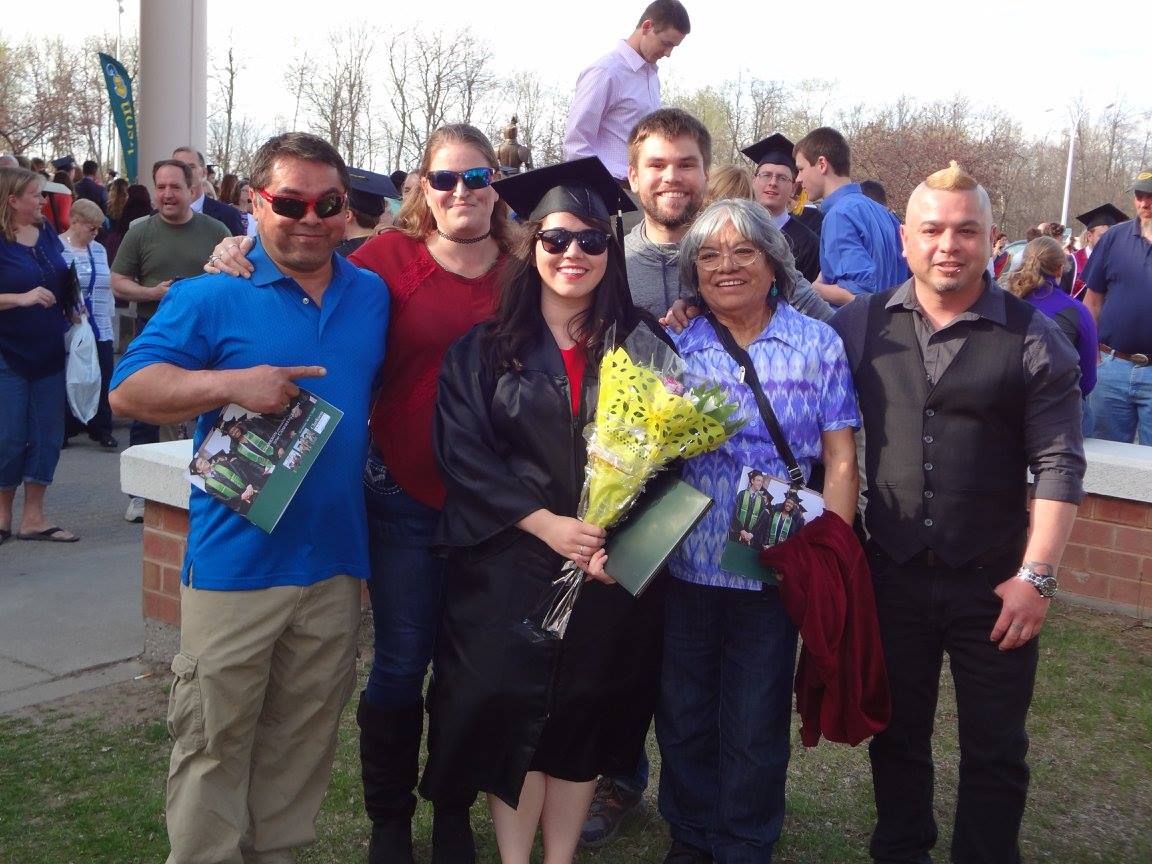
Graduation was a family affair. “My parents and mi abuela were there, and my uncle was there. I showed them around campus. It was surreal.”
Building a career
Maria’s first job after Clarkson was as an operator in circuit board etching at an aerospace manufacturer. She stayed in aerospace, but moved into environmental engineering, then product engineering and operations program management.
Eventually she landed at Amphenol Aerospace, where she works today. “I bridge the gap between various disciplines and focus on new products. Every day is different.”
Outside of work, Maria’s personal life has also taken flight with her partner Gerald, whom she’s been with for 12 years. They met at Clarkson, and he also works in the aerospace industry, but on the computer engineering side.
Looking back, moving forward
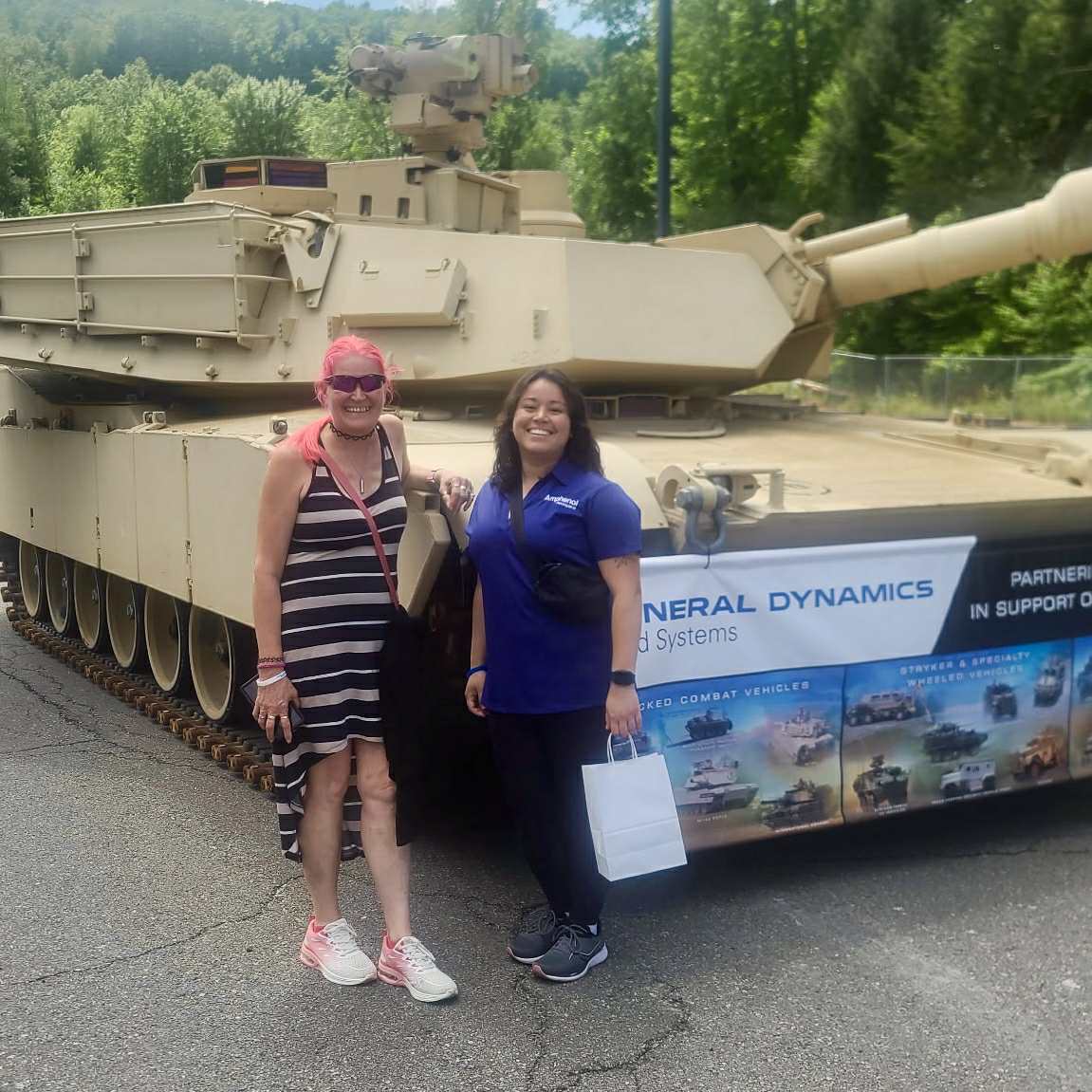
work celebration
Reflecting on her journey, Maria is clear: VSAC made the difference. “I wouldn’t have made it without them. Having that person who has faith in you, it was everything. I wouldn’t have understood all the details, gotten to see the colleges, or what the environment would be like. And the value of meeting other students in similar positions was huge. There were a lot of other first-gen students I met through VSAC. All of us did remarkable things to get where we did.”
Maria is proud of where she is today. She’s in a stable, challenging career that excites her, with the tools to support herself and her health. “I work a decent job and can afford the medical support and the counseling. It’s still a work in progress, but supporting myself in that way has been fantastic. And my job? Every day is unique and fun and interesting. I’m proud of where I’ve gotten. And I know I didn’t get here alone.”